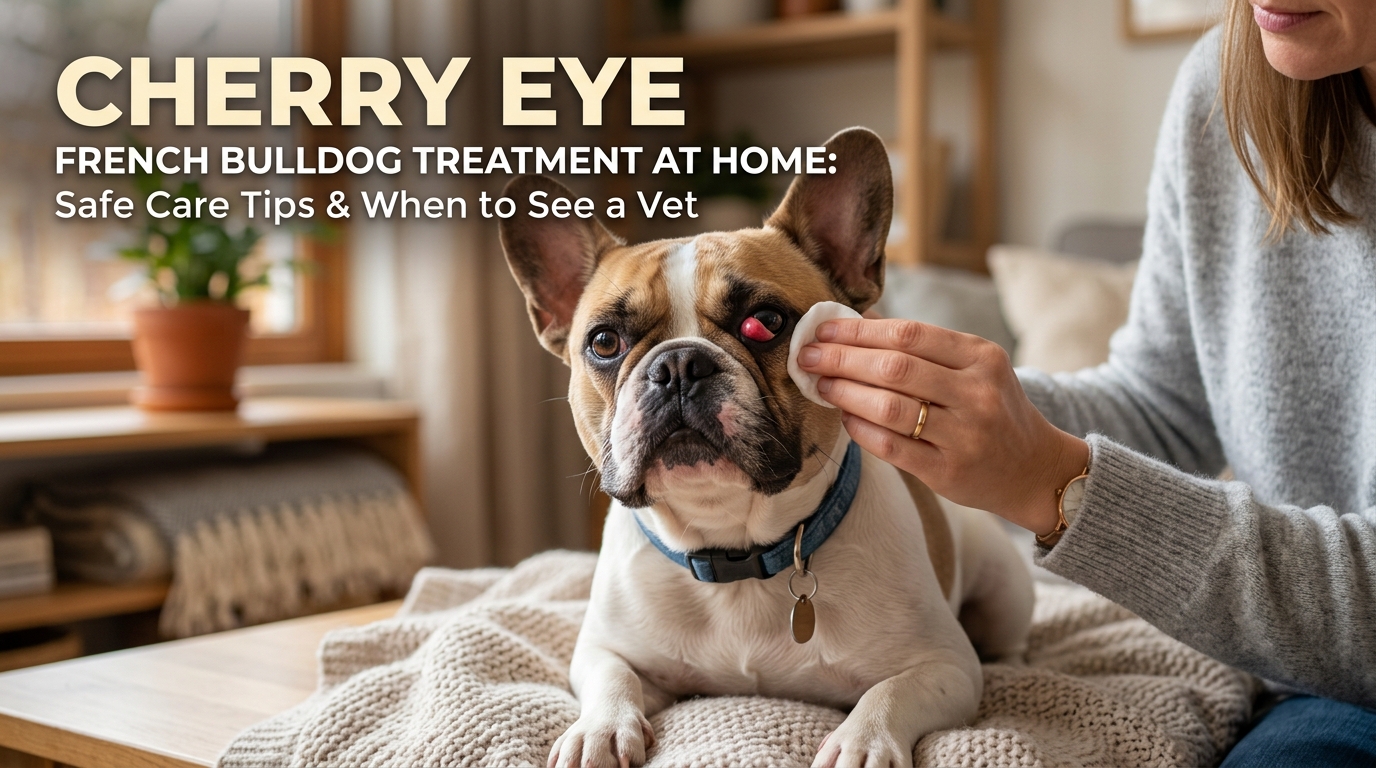
Cherry eye is one of the most common eye conditions seen in French Bulldogs, and for many owners, it can appear suddenly and without warning. One day your dog’s eyes look completely normal, and the next you notice a bright red or pink lump sitting in the inner corner of the eye. It can look alarming at first glance, and many owners immediately worry that their dog has suffered an injury or serious eye problem.
This condition is commonly known as cherry eye, or dog cherry eye, because the swollen tissue often resembles a small red cherry protruding from the eye. It occurs when the gland of the third eyelid—also called the nictitating membrane—slips out of its normal position and becomes visible. Unlike humans, dogs have this extra eyelid that plays an important role in protecting the eye and producing tears. In fact, the third eyelid gland is responsible for a significant portion of your dog’s tear production, which means it is far more important than many owners realize.
French Bulldogs are especially prone to cherry eye because of their unique facial structure and genetics. Their compact skull shape, prominent eyes, and predisposition to weaker connective tissues make the gland more likely to become displaced. Puppies and young French Bulldogs are often affected, although the condition can appear at almost any age. In some cases, only one eye is involved at first, but the second eye may develop the same issue later.
Beyond the visible swelling, dogs with cherry eye may show signs of irritation such as excessive tearing, blinking, pawing at the eye, redness, or mild discomfort. Some Frenchies seem completely unbothered, while others become noticeably irritated by the protruding tissue.
Because the condition is so noticeable, many owners begin searching for cherry eye French Bulldog treatment at home, hoping to find quick ways to reduce swelling and help their pet feel more comfortable. Home care methods—such as keeping the eye clean, preventing rubbing, and using veterinarian-approved lubricating drops—may provide temporary relief and reduce irritation. However, it is important to understand that home remedies rarely correct the underlying problem because the displaced gland usually does not return permanently to its normal position on its own.
While supportive care at home can help protect the eye in the short term, most cases eventually require veterinary evaluation. Early treatment is important not only to relieve discomfort but also to preserve the function of the third eyelid gland and reduce the risk of future complications such as dry eye or chronic irritation.
For French Bulldog owners, recognizing cherry eye early and understanding the difference between temporary symptom relief and proper treatment can make a significant difference in protecting their dog’s long-term eye health.
What Is Cherry Eye in French Bulldogs?
Cherry eye in French Bulldogs occurs when the gland of the third eyelid slips out of its normal position and becomes visible as a swollen red or pink mass in the corner of the eye. Veterinarians refer to this condition as third eyelid gland prolapse or canine cherry eye.
To understand why this happens, it helps to know a little about canine eye anatomy. Unlike humans, dogs have an additional eyelid called the third eyelid (or nictitating membrane), located in the inner corner of the eye. This structure plays an important role in protecting the eye, spreading tears, and keeping the surface moist. The gland attached to this eyelid is responsible for producing a significant portion of your dog’s tears, making it essential for long-term eye health.
When the tissues holding this gland in place weaken or stretch, the gland can slip outward and protrude, creating the characteristic “cherry-like” appearance that gives the condition its name.
French Bulldogs are especially prone to cherry eye because of their unique facial anatomy. As a brachycephalic breed (short-nosed and flat-faced), Frenchies naturally have more prominent, exposed eyes and shallower eye sockets. Combined with inherited weakness in the connective tissues around the eye, this makes them more susceptible not only to cherry eye but also to several other eye-related conditions.
For many owners, the condition appears suddenly and can be quite alarming. A French Bulldog may wake up with a visible lump in the eye despite showing no symptoms the day before.
Common Signs of Cherry Eye in French Bulldogs
Owners may notice one or more of the following symptoms:
- A red or pink lump near the inner corner of the eye, often resembling a small cherry
- Excessive tearing or mild eye discharge
- Eye redness, irritation, or inflammation around the affected area
- Frequent pawing, rubbing, or scratching at the eye due to discomfort
- Swelling around the third eyelid gland
- Increased blinking or squinting in some dogs
- Mild sensitivity or discomfort, especially if irritation develops
Some French Bulldogs seem unaffected initially, while others become irritated and repeatedly rub their face, which can worsen inflammation.
One of the most common questions owners ask is: Can cherry eye heal on its own in French Bulldogs?
In most cases, the answer is no. While the swelling may occasionally appear to improve temporarily or become less noticeable, the displaced gland usually does not permanently return to its normal position without treatment. Leaving the condition untreated for too long may increase the risk of chronic irritation, inflammation, and reduced tear production later in life.
Because the third eyelid gland is important for keeping the eye lubricated, early attention is recommended to help protect your French Bulldog’s long-term eye health.
Cherry Eye French Bulldog Treatment at Home
Although home remedies for cherry eye in French Bulldogs cannot permanently correct the condition, they can still help reduce irritation, protect the exposed gland, and keep your dog more comfortable while waiting for veterinary care. Since cherry eye involves the third eyelid gland slipping out of its normal position, supportive treatment at home focuses mainly on preventing dryness and minimizing discomfort rather than fixing the underlying problem.
1. Keep the Eye Lubricated
One of the most important parts of home care is keeping the affected eye properly lubricated. When the third eyelid gland becomes exposed, it loses some of the protection it normally has and may dry out more easily. This dryness can increase irritation, redness, and discomfort, especially if your French Bulldog spends time outdoors, in windy conditions, or in air-conditioned environments.
Using artificial tears made for dogs or veterinarian-approved lubricating eye drops may help keep the eye moist and comfortable. Lubrication can also reduce friction caused by blinking and help protect the exposed tissue from becoming further irritated. Many owners searching for cherry eye home treatment use this method because it is simple, safe, and helpful for improving eye comfort.
However, it is important to remember that lubrication is considered supportive care rather than a cure. While it may relieve symptoms temporarily, it does not move the displaced gland back into place.
2. Apply a Warm Compress
A warm compress is another common home remedy used to help soothe irritation associated with cherry eye. The gentle warmth may help relax the tissues around the eye and temporarily reduce mild swelling linked with dog eye inflammation.
To apply a warm compress safely, take a clean and soft cloth, soak it in warm water, and gently wring out the excess moisture. Place it lightly over your French Bulldog’s closed eye for around three to five minutes. This process can be repeated several times throughout the day if needed.
Many owners researching how to reduce cherry eye swelling in French Bulldogs include warm compresses in their temporary home care routine because they are easy to perform and non-invasive. Although this method will not permanently reposition the gland, it may provide temporary comfort and reduce irritation around the affected area.
3. Gentle Massage May Help in Some Cases
Some owners attempt a French Bulldog cherry eye massage technique in hopes of encouraging the gland back into position temporarily. In certain mild cases, the gland may briefly move inward again, although recurrence is very common because the supporting tissues remain weakened.
If you decide to try this method, always wash your hands thoroughly first and keep the eyelid gently closed during the massage. Only very light pressure should be used while moving toward the inner corner of the eye. Direct pressure should never be applied to the protruding tissue because the area is delicate and excessive force may worsen irritation.
Although people often search for non-surgical cherry eye treatment for French Bulldogs, massage is not always effective and should not be considered a permanent solution. Even if the gland returns to its normal position temporarily, it often protrudes again later.
4. Prevent Eye Rubbing
French Bulldogs experiencing eye irritation frequently try to relieve discomfort by rubbing their face against furniture, bedding, carpets, or using their paws to scratch the eye. Unfortunately, this behavior may worsen the condition by increasing inflammation and causing additional irritation to the exposed gland.
Repeated rubbing can sometimes lead to further swelling or even injury around the eye area. Because of this, preventing self-trauma becomes an important part of home care.
Using an Elizabethan collar (e-collar) may help protect the eye and stop excessive rubbing, particularly while waiting for veterinary treatment or before cherry eye surgery. Although some dogs initially dislike wearing one, it can significantly reduce the risk of worsening irritation and help keep the eye protected during recovery and treatment planning.
While these home care methods may help keep your French Bulldog comfortable, it is important to understand that cherry eye is usually a structural issue involving displacement of the third eyelid gland. In most cases, the condition does not permanently resolve with home treatment alone, and veterinary evaluation is eventually needed to determine the best long-term approach.
Can Cherry Eye Go Away Without Surgery?
One of the most common questions French Bulldog owners ask after discovering cherry eye is: Can cherry eye go away without surgery? It is an understandable concern because many owners hope the swelling will disappear on its own or improve enough with home care to avoid a medical procedure.
The answer is that it can occasionally improve temporarily, but permanent resolution without treatment is uncommon.
In some cases, the displaced gland may briefly slip back into its normal position on its own. Owners sometimes notice the swelling appears smaller after rest, sleep, gentle massage, or home care measures. This temporary improvement often creates hope that the condition has resolved completely. However, because the tissues that normally hold the third eyelid gland in place are already weakened, the gland frequently slips out again later.
For many French Bulldogs, cherry eye becomes a recurring issue where the swelling disappears and returns repeatedly over time. Some dogs experience occasional flare-ups, while others develop a persistent prolapse that remains visible most of the time.
This is one reason veterinarians often recommend surgical repositioning rather than gland removal. The third eyelid gland is extremely important because it contributes significantly to tear production and helps keep the eye properly lubricated. Preserving the gland supports long-term canine eye health and may help reduce the risk of future complications such as chronic dryness and irritation.
Owners searching for temporary treatment for cherry eye in dogs at home should therefore view home remedies as supportive care. Lubricating eye drops, warm compresses, and protecting the eye from rubbing may improve comfort and reduce irritation, but they generally do not correct the underlying structural problem.
When Should You Contact a Veterinarian?
Although mild cases may initially seem manageable at home, there are situations where veterinary attention becomes especially important. Cherry eye itself is not always an emergency, but complications can develop if irritation worsens or the exposed tissue becomes inflamed.
You should contact a veterinarian if your French Bulldog develops significant swelling, especially if the protruding gland becomes larger or more inflamed than before. Increased swelling may indicate worsening irritation or ongoing inflammation around the tissue.
Another important warning sign is yellow or green discharge coming from the eye. While mild tearing can occur with cherry eye, colored discharge may suggest infection or more serious irritation that requires medical attention.
Owners should also watch carefully for changes in the appearance of the eye itself. If the eye develops a cloudy, hazy, or bluish appearance, this may indicate involvement beyond the third eyelid gland and should be evaluated promptly.
Behavioral changes can also be meaningful. Persistent squinting, excessive blinking, keeping the eye closed, or obvious signs of pain may indicate increased discomfort or additional eye problems that should not be ignored.
Veterinary evaluation is also recommended when the prolapsed gland remains visible for an extended period and does not improve. Ongoing prolapse that repeatedly returns or stays protruded often benefits from professional assessment because delaying treatment may increase irritation and potentially affect long-term eye function.
Since the third eyelid gland plays a role in tear production, postponing prolapsed gland treatment for too long may raise the risk of complications and chronic irritation.
Final Thoughts
Learning how to treat cherry eye in French Bulldogs at home can help owners respond quickly when the condition first appears. Simple supportive measures such as lubricating eye drops, warm compresses, and preventing rubbing may reduce irritation and keep your French Bulldog more comfortable while waiting for veterinary care.
These home methods can be helpful during the early stages and may provide temporary relief, but it is important to keep expectations realistic. Cherry eye is usually caused by displacement of the third eyelid gland, meaning the underlying issue often remains even if the swelling improves temporarily.
Because of this, most cases of French Bulldog third eyelid prolapse treatment still benefit from veterinary assessment to achieve the best long-term outcome. Early care not only improves comfort but may also help preserve tear production and protect your French Bulldog’s eye health for years to come.