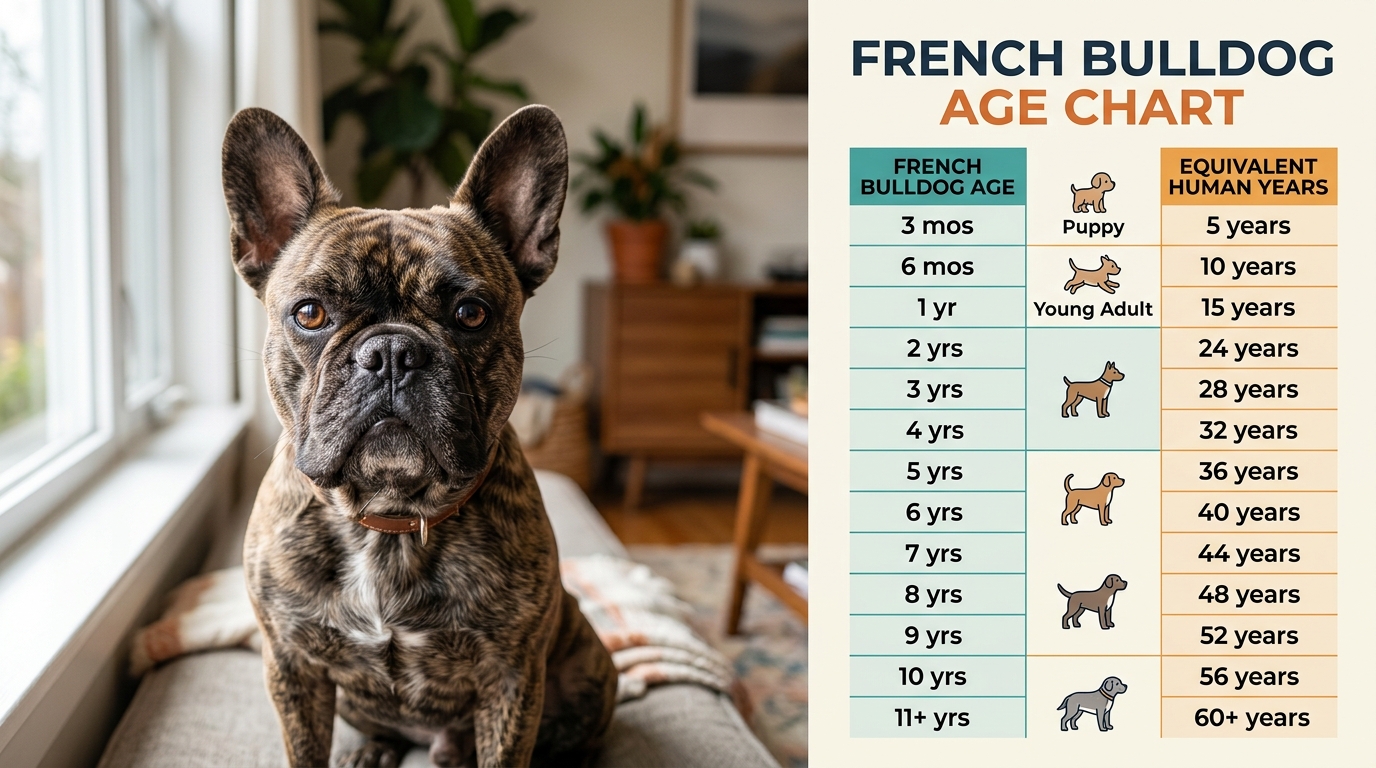
Understanding how dogs age compared to humans is an essential part of responsible pet ownership, and it becomes especially important with breeds like the French Bulldog, which have unique health and aging patterns. A French Bulldog age chart is a helpful tool that translates a dog’s actual age into “human years,” allowing owners to better understand what life stage their pet is in—whether it is early development, full adulthood, or senior age. This comparison is not exact science, but it gives a practical way to interpret physical growth, behavior changes, and health needs over time.
Many pet owners look up a French Bulldog age chart in human years because it helps make sense of how quickly these dogs mature in their early years and how their aging process differs from humans. For example, French Bulldogs tend to develop rapidly during the first year of life, reaching adolescence and young adulthood much faster than people do. After this early growth phase, their aging slows down somewhat, but they may begin to show signs of middle age earlier than some other breeds due to their compact body structure and genetic predispositions.
Using an age chart also helps owners adjust care routines appropriately. Puppies require more training, socialization, and nutrition support, while adult French Bulldogs benefit from consistent exercise, weight management, and preventive healthcare. As they transition into senior years, typically around 7–9 years depending on health and lifestyle, their needs often shift toward more frequent veterinary checkups, joint care, and diet adjustments.
Overall, a French Bulldog age chart is more than just a conversion tool—it is a guide that helps owners understand their dog’s physical and emotional development at each stage of life. By interpreting age in this way, owners can provide more targeted care, improve quality of life, and better anticipate the changes that come with aging.
Understanding French Bulldog Aging
Dogs do not age in a simple one-to-one way compared to humans. Instead, their growth and aging follow a different biological pattern. In the early stages of life, dogs develop very quickly—physically, mentally, and emotionally. A French Bulldog, like other small breeds, reaches key milestones such as weaning, teething, basic training ability, and sexual maturity much faster than humans do. This means that within just the first year or two of life, a French Bulldog transitions from a dependent puppy into a young adult.
After this rapid early development phase, the aging process becomes more gradual. Unlike the early years, where changes happen quickly month by month, adult French Bulldogs tend to age more steadily over time. However, even though they are a small breed that often lives longer than large dogs, they can still experience breed-specific health challenges such as breathing difficulties, joint strain, and weight sensitivity, which may influence how quickly they show signs of aging.
French Bulldogs generally mature faster at the beginning of their lives but may enter middle age earlier than expected compared to humans. This is why understanding their life stages is important for proper care, as their needs change significantly from puppyhood to adulthood and into their senior years.
A dog age chart is commonly used as a reference to estimate a dog’s age in human years and to make this aging process easier to understand. While it is not scientifically exact and should not be treated as a precise conversion, it remains a widely used and practical tool. It helps owners visualize their dog’s life stage more clearly and make better decisions regarding nutrition, exercise, training, and veterinary care at each phase of life.
French Bulldog Age Chart in Human Years
The following chart provides an estimated comparison between French Bulldog age and their equivalent human age. It is designed to help owners better understand how a French Bulldog’s life stages progress in relation to human development. Since dogs age at a different biological rate than humans, this type of chart serves as a simplified guide rather than an exact scientific measurement. It makes it easier to interpret important changes in growth, maturity, and aging in a more familiar human context.
The chart clearly shows that the first two years of a French Bulldog’s life are the most critical and fast-moving stages of development. During this period, a French Bulldog experiences rapid physical growth, completes key developmental milestones, and reaches full sexual and behavioral maturity. In human terms, this early phase is often compared to the transition from infancy through adolescence into early adulthood, highlighting just how quickly dogs mature compared to people.
After the first two years, the aging process becomes noticeably slower and more stable. Instead of rapid monthly changes, French Bulldogs enter a more consistent adult phase where physical growth has stopped, and the focus shifts to maintaining health, strength, and overall well-being. With proper care, nutrition, and regular veterinary checkups, many French Bulldogs remain active and healthy throughout their adult years.
As they continue to age, most French Bulldogs begin to show signs of senior life around the age of eight. This stage may include reduced energy levels, changes in mobility, and increased need for medical attention or dietary adjustments. Understanding this progression through an age chart helps owners anticipate these changes early and provide appropriate care at each stage of their dog’s life, ultimately improving both quality of life and longevity.
Life Stages of a French Bulldog
A French Bulldog’s life is generally divided into four main stages: puppy, young adult, adult, and senior. Each stage represents a distinct phase of physical growth, behavioral development, and changing health needs. Understanding these stages is important because French Bulldogs require different types of care, training, nutrition, and veterinary attention as they progress through life.
During the puppy stage, a French Bulldog experiences the fastest rate of growth and learning. This is the period when they develop basic behaviors, begin socialization, and form early habits that shape their future personality. They also go through teething, rapid physical changes, and require frequent feeding and close supervision.
As they move into the young adult stage, French Bulldogs start to gain more independence and emotional stability. Their energy levels are usually high, and this is a key time for consistent training, social exposure, and building healthy routines. Physically, they are still developing muscle tone and structure, but most of their early growth has already occurred.
The adult stage represents full maturity. At this point, a French Bulldog has reached its complete physical size and behavioral stability. Care during this stage focuses on maintaining a healthy weight, providing regular exercise, and preventing common breed-related issues such as breathing difficulties or joint stress. This is often the longest stage of their life.
Finally, in the senior stage, aging becomes more noticeable. Energy levels typically decrease, mobility may become limited, and the risk of age-related health conditions increases. Senior French Bulldogs benefit from more frequent veterinary checkups, softer or specialized diets, and a more comfortable, low-stress environment.
By understanding these four life stages, owners can better anticipate their French Bulldog’s needs and provide the right care at the right time, ensuring a healthier and more comfortable life overall.
Puppy Stage (0–1 Year)
The puppy stage is the most important foundation of a French Bulldog’s life, as it shapes nearly all aspects of future growth, behavior, and health. During this period, the dog undergoes extremely rapid physical development along with major neurological and emotional changes. This stage is often compared to both human childhood and early adolescence combined because so much learning, growth, and adaptation happens in a very short time.
In the first few months of life, a French Bulldog begins developing essential motor skills such as walking steadily, running, and coordinating movement. At the same time, they go through teething, which can lead to chewing behavior as their adult teeth replace their baby teeth. Their senses also become sharper, and they start exploring their environment more actively, becoming curious and increasingly responsive to sounds, people, and surroundings.
Emotionally, this is the stage where strong bonding begins between the puppy and its owner. French Bulldogs start recognizing familiar people and developing trust, attachment, and early social behavior patterns. These early experiences play a major role in shaping their temperament and confidence as adults.
Proper care during the puppy stage is crucial for long-term health and behavior. This includes providing a structured feeding schedule with nutrient-rich puppy food to support rapid growth, ensuring timely vaccinations and deworming to protect against diseases, and introducing gentle, consistent training to establish basic obedience. Early socialization is especially important, as exposing the puppy to different people, environments, and other animals helps reduce fearfulness and prevents behavioral issues later in life.
Because this stage forms the foundation of a dog’s overall development, it is often used as the starting point in a French Bulldog age chart, helping owners understand how quickly their puppy is progressing compared to human developmental stages.
Young Adult Stage (1–3 Years)
Once a French Bulldog reaches around one year of age, it enters the young adult stage of life. At this point, the dog has completed most of its major physical growth and is considered physically mature. However, despite reaching full size, it still retains a youthful personality characterized by high energy, playfulness, and curiosity. This stage is often seen as a transition period where puppy-like behavior gradually blends into more adult-like stability.
Physically, a French Bulldog in this stage has a fully developed body structure, including muscle tone and skeletal maturity. While growth in height and length has largely stopped, the dog continues to refine coordination, strength, and stamina. Behaviorally, there is a noticeable shift toward more consistent and predictable actions compared to the earlier puppy stage, although bursts of excitement and playful behavior are still very common.
Even though they are now mature in body, young adult French Bulldogs still require a significant amount of mental and physical stimulation. Regular walks, interactive play, and enrichment activities are important to prevent boredom, reduce destructive behavior, and maintain overall well-being. Without proper stimulation, dogs at this stage may develop unwanted habits such as excessive barking or chewing.
Training remains especially important during the young adult stage. This is the period when reinforcement of basic commands, leash manners, and household rules becomes critical, as behaviors learned now are likely to persist into later life. Consistency from the owner helps shape a well-behaved and balanced adult dog.
In terms of human comparison, this stage is often associated with young adulthood. It represents a balance between independence and energy, where the French Bulldog is fully capable physically but still emotionally lively and eager to engage with its environment. This makes it a key stage in understanding a French Bulldog age comparison chart, as it highlights both maturity and continued youthful behavior.
Adult Stage (4–7 Years)
The adult stage is widely regarded as the most stable and balanced period in a French Bulldog’s life. By this age range, the dog has fully matured both physically and mentally, and its behavior becomes much more predictable compared to the earlier, more energetic stages. While French Bulldogs in this phase are still active and enjoy playtime, their overall energy levels tend to even out, resulting in a calmer and more settled temperament.
Physically, the dog is at its peak in terms of strength and coordination, but subtle biological changes begin to take place. Metabolism gradually slows down, which means the body processes food and energy less quickly than before. Because of this shift, weight management becomes increasingly important. French Bulldogs are naturally prone to gaining excess weight, and without proper portion control and regular exercise, they can quickly become overweight, which may lead to additional health complications.
Although many French Bulldogs remain healthy during this stage, the early signs of aging may start to appear in subtle ways. These can include slightly reduced stamina, longer recovery times after exercise, or early stiffness in joints, especially in cooler weather or after rest. These changes are usually gradual, but they are important indicators that the dog’s long-term health needs more consistent attention.
To maintain good health throughout the adult stage, regular veterinary checkups become increasingly important. Routine examinations help detect early signs of common breed-related issues such as breathing difficulties, joint problems, or spinal stress. Alongside medical care, maintaining a consistent exercise routine—such as daily walks and moderate play—helps support mobility, weight control, and overall well-being.
Because of its long duration and relative stability, the adult stage is often highlighted in French Bulldog development stage guides. It represents the longest and most consistent portion of a French Bulldog’s life, making it a key period for maintaining habits that directly influence long-term health and quality of life.
Senior Stage (8+ Years)
Once a French Bulldog reaches around eight years of age, it is generally considered to have entered the senior stage of life. This phase is marked by a gradual slowing down of physical abilities and a noticeable shift in energy levels. While the dog may still remain alert and affectionate, its body begins to show the natural effects of aging, and it often becomes more sensitive to changes in temperature, activity level, and routine.
During this stage, daily activity patterns typically change. Senior French Bulldogs tend to prefer shorter, more relaxed walks rather than long or highly active play sessions. They may sleep more frequently and require longer recovery periods after physical exertion. It is also common to observe signs such as reduced stamina, mild to moderate joint stiffness, and slower movement, especially after rest or in colder weather.
As aging progresses, the likelihood of developing age-related health conditions increases. These may include joint problems, mobility issues, dental concerns, or other chronic conditions that require ongoing monitoring and care. While not every dog will experience serious illness, early detection becomes increasingly important in maintaining quality of life.
Veterinary care plays a critical role during the senior stage. Regular checkups—often more frequent than in earlier life stages—help identify early signs of age-related changes and allow for timely treatment or management strategies. In many cases, dietary adjustments are also recommended, such as food designed to support joint health, maintain a healthy weight, and improve overall comfort and digestion.
Because of these changes, many owners actively look up topics such as French Bulldog senior age symptoms and care to better understand how to support their aging pet. Proper attention, gentle exercise, and consistent medical care during this stage can significantly improve comfort, mobility, and overall well-being, allowing senior French Bulldogs to enjoy a healthier and more peaceful later life.
French Bulldog Lifespan Overview
The average lifespan of a French Bulldog typically ranges between 10 and 12 years, although some may live slightly shorter or longer lives depending on their overall health and living conditions. This lifespan is considered moderate compared to other small dog breeds, mainly because French Bulldogs are prone to certain breed-specific health challenges that can influence longevity.
Several key factors play an important role in determining how long a French Bulldog lives. Genetics is one of the most significant influences, as inherited traits can affect susceptibility to conditions such as breathing difficulties, joint issues, or heart-related problems. In addition to genetics, lifestyle choices have a major impact on overall lifespan. Dogs that are kept at a healthy weight, receive regular exercise, and live in a low-stress environment tend to age more slowly and experience fewer health complications over time.
Diet is another crucial factor in supporting a long and healthy life. A balanced, nutrient-rich diet helps maintain proper body condition, supports immune function, and reduces the risk of obesity—a common concern in French Bulldogs that can significantly shorten lifespan and increase the likelihood of health issues. Alongside nutrition, routine veterinary care is essential for early detection and prevention of potential problems. Regular checkups, vaccinations, dental care, and health screenings all contribute to improved longevity and quality of life.
Environmental conditions and daily care routines also influence how well a French Bulldog ages. Dogs that receive appropriate temperature control, especially in hot weather due to their sensitivity to heat, and those that avoid excessive physical strain are more likely to remain healthy throughout their lives.
Understanding the typical lifespan of a French Bulldog helps owners prepare for each stage of life more effectively. It allows them to anticipate changes in care needs, adjust routines accordingly, and provide the right support at the right time. This is why many people search for information such as how long French Bulldogs live on average or what their life expectancy chart looks like, as it helps them plan for long-term care and ensure their pet enjoys a healthier, more comfortable life from puppyhood through senior years.
Importance of Understanding Age Stages
Using a French Bulldog age chart explained in human years gives owners a clearer and more relatable understanding of their dog’s physical growth and emotional development. Since dogs age differently than humans, this type of comparison helps simplify complex biological changes into familiar life stages. It allows owners to better interpret what their dog may be experiencing at different points in life, from rapid puppy development to slower senior aging.
Understanding these age stages also provides a practical framework for adjusting daily care routines as the dog grows. For example, puppies require more structured training and nutrition support, adults need balanced exercise and weight management, and senior dogs benefit from gentler activity and increased medical attention. By recognizing these shifting needs, owners can provide more targeted and effective care throughout their dog’s life.
In addition, being aware of French Bulldog aging signs by year helps owners identify early physical or behavioral changes that may signal health concerns. Subtle shifts such as reduced energy, changes in appetite, stiffness, or differences in behavior can often appear gradually. Recognizing these signs early allows for timely veterinary intervention, which can significantly improve comfort, prevent complications, and enhance overall quality of life.
Final Thoughts
A French Bulldog’s life is made up of distinct and meaningful stages, each with its own developmental patterns and care requirements. While no age chart can perfectly translate biological aging into exact human years, a French Bulldog age chart in human years remains a valuable and practical tool for understanding how your pet grows, matures, and ages over time.
By staying informed and attentive at each stage of life, owners can provide the right balance of nutrition, exercise, training, and medical care. With consistent attention, a healthy lifestyle, and regular veterinary support, French Bulldogs can enjoy a comfortable, active, and fulfilling life from their early puppy days through to their senior years.