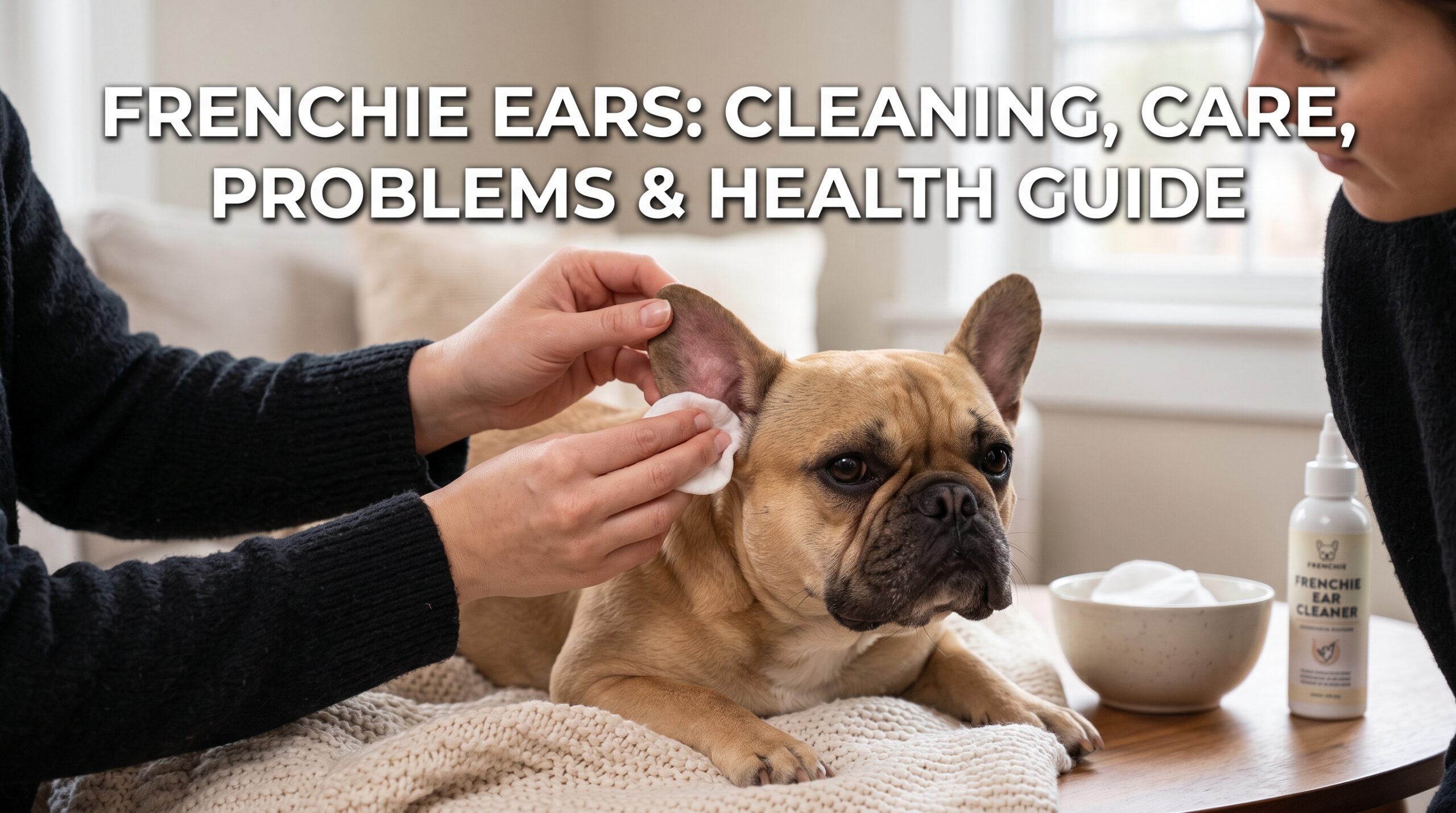
Frenchie ears are one of the cutest features of a French Bulldog. Those tall, bat-like ears give every Frenchie a unique look. But those adorable Frenchie ears need regular care. Without proper ear hygiene, dirt, wax, and moisture can build up inside the ear canal. That buildup may lead to irritation, unpleasant ear odor, or an ear infection. Your Frenchie may also start scratching ears or shaking their head more often.

Keeping Frenchie ears clean can help support better ear health and overall well-being. Regular ear cleaning removes surface debris and helps prevent moisture buildup. However, you shouldn’t over-clean your Frenchie ears because that can cause irritation and sensitivity. In this guide, you’ll learn how to care for Frenchie ears safely. You’ll also learn the warning signs that mean your Frenchie needs veterinary attention.
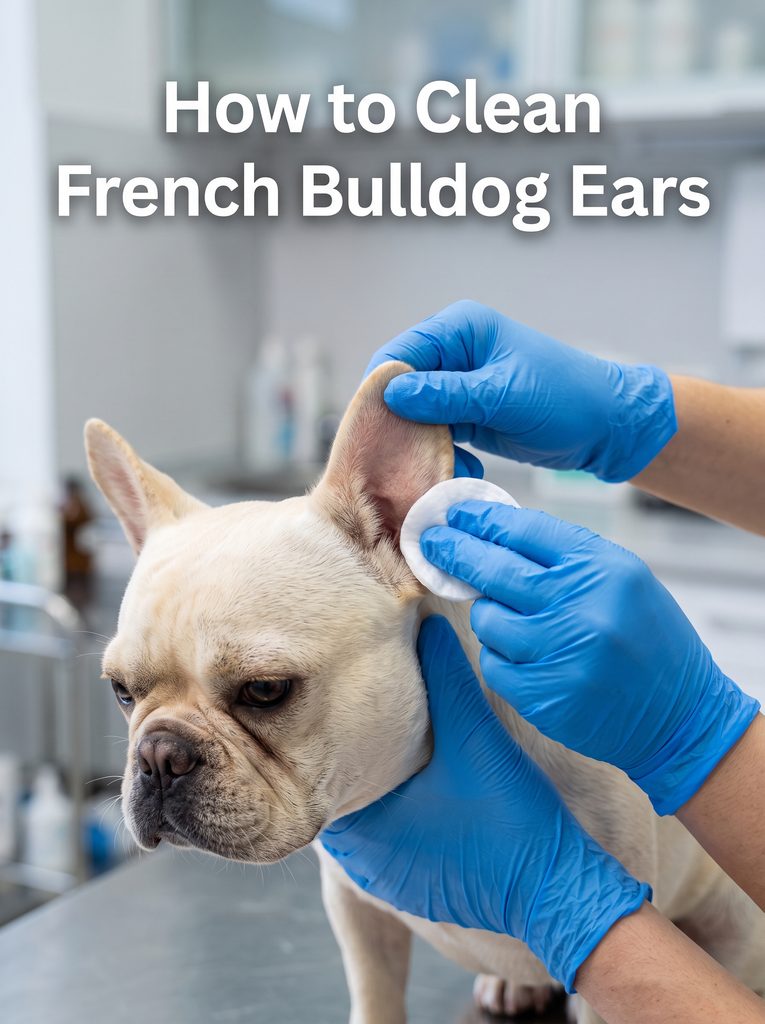
How to Clean French Bulldog Ears
Start by checking your Frenchie ears for redness, swelling, odor, or discharge. Use a vet-approved ear-cleaning solution and a cotton ball or gauze. Gently clean the outer ear and ear flap. Never push anything deep into the ear canal. Frenchie ears need gentle handling to avoid irritation or injury.
For regular ear care, remove visible dirt and excess wax carefully. You can massage the base of the ear gently to loosen debris. Then dry the ear to prevent moisture buildup. Avoid over-cleaning, as sensitive Frenchie ears can become irritated. Ask your veterinarian about the best cleaning routine.

Why Should You Clean Your French Bulldog’s Ears?
Frenchie ears can collect wax, dirt, and moisture because of their ear structure. Regular ear cleaning helps maintain good ear hygiene and supports healthy French Bulldog ears. Without proper care, buildup may encourage bacterial infection or yeast infection. Clean Frenchie ears can also reduce unpleasant odor and discomfort.
Good ear care protects your Frenchie from common ear health issues. Watch for head shaking, scratching ears, redness, swelling, or ear discharge. These signs may indicate inflammation or infection. Healthy Frenchie ears also support hearing and overall well-being. If symptoms continue, seek veterinary attention instead of delaying treatment.
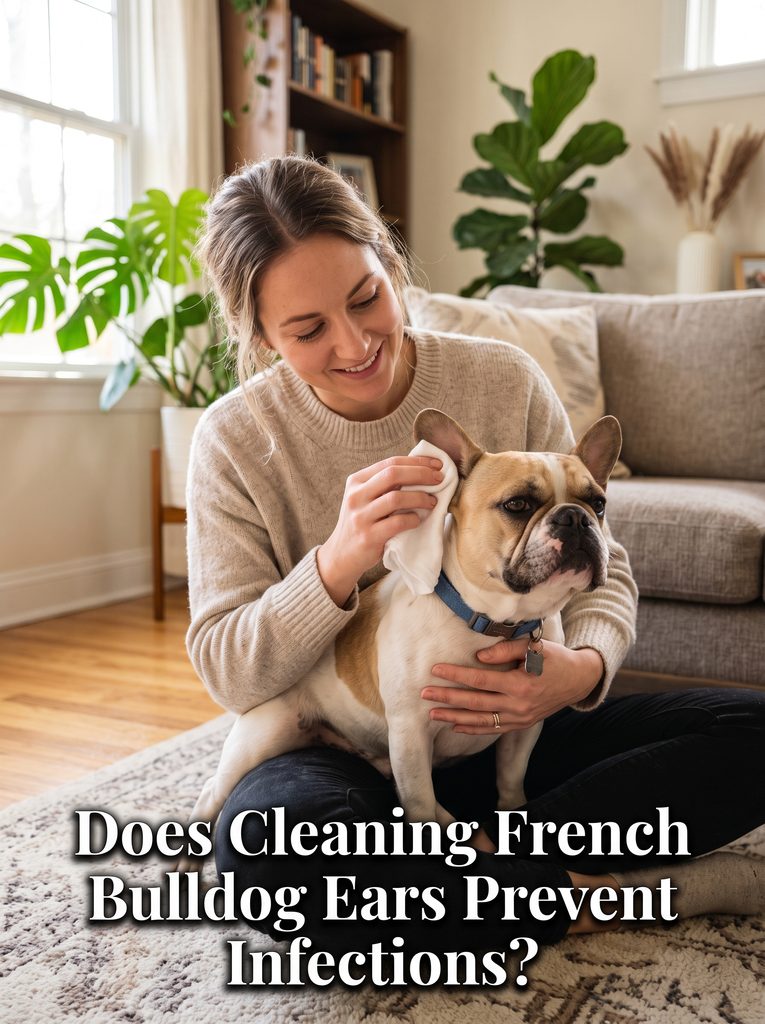
Does Cleaning French Bulldog Ears Prevent Infections?
Regular cleaning can help keep Frenchie ears free from excess wax, dirt, and moisture. This supports better ear hygiene and may lower the risk of bacterial or yeast infections. However, cleaning doesn’t guarantee protection from every ear problem. Allergies, ear mites, and other conditions can still affect your Frenchie ears.
Watch your Frenchie ears for redness, swelling, unpleasant odor, discharge, or pain. These signs can point to an ear infection or inflammation. Avoid over-cleaning because it may cause irritation and sensitivity. If your Frenchie develops recurring ear infections or painful ears, contact a veterinarian for proper veterinary treatment and care.
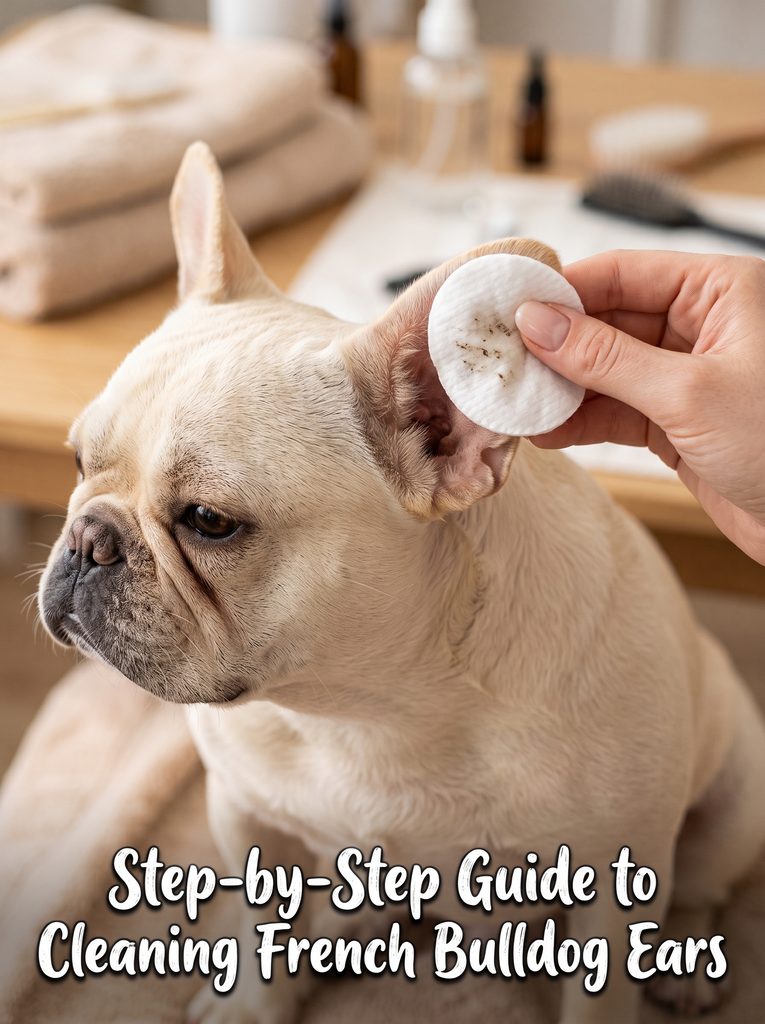
Step-by-Step Guide to Cleaning French Bulldog Ears
First, gather a vet-approved ear-cleaning solution, cotton ball, and gauze. Keep your Frenchie calm before starting. Gently lift the ear flap and inspect the outer ear. Apply the solution as directed. Massage the base gently to loosen debris. Never push cotton swabs deep into Frenchie ears or the ear canal.
Next, use gauze or a cotton ball to remove loosened debris. Carefully clean the outer ear and visible areas. Don’t force anything deeper inside. Finish by drying Frenchie ears and removing excess moisture. Regular ear cleaning can support good ear health while preventing unnecessary irritation and moisture buildup.

Step 1: Use Ear Cleansing Wipes
Start by gently examining your Frenchie ears for redness, swelling, or discharge. Choose dog ear wipes made for sensitive ears. Carefully wipe the outer ear and ear flap to remove surface debris. Don’t push wipes into the ear canal. Frenchie ears need gentle cleaning to avoid irritation, scratches, or injury.
Use a clean wipe for each ear to maintain good ear hygiene. Focus on visible dirt and wax buildup around the outer ear. Never scrub aggressively. If Frenchie ears smell unpleasant or look inflamed, stop cleaning. These signs may indicate an ear infection that requires veterinary attention.
Step 2: Ear Rinsing
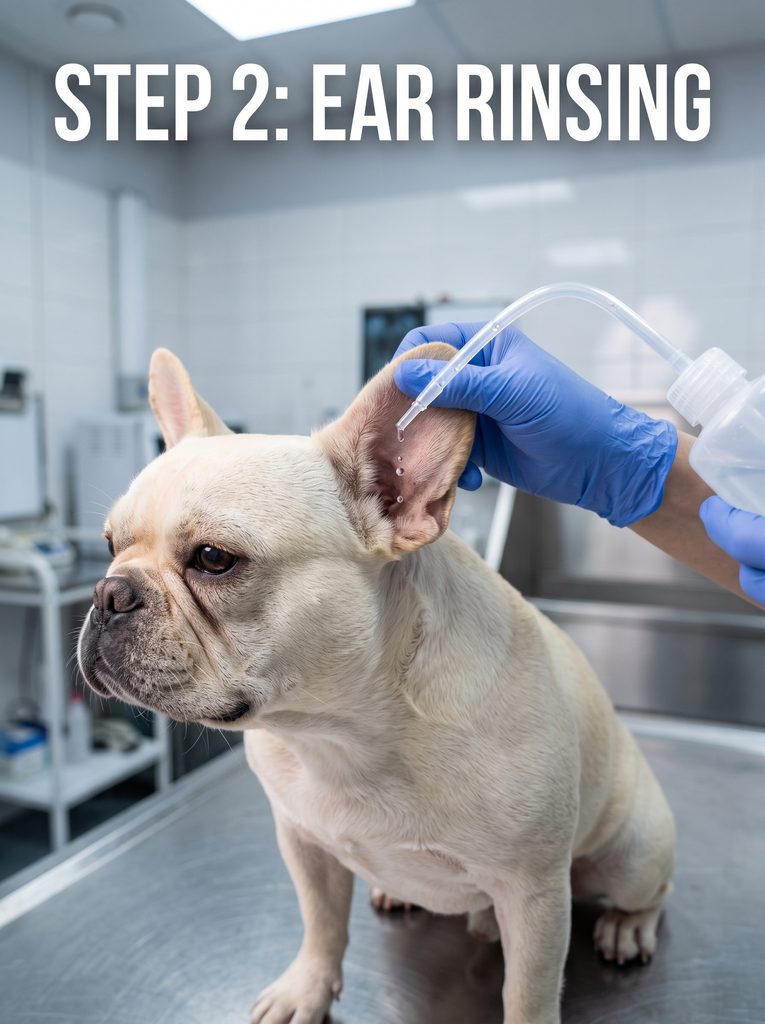
For the next step, use a veterinarian-approved ear rinse or ear-cleaning solution. Apply it according to the product instructions. Gently massage the base of your Frenchie ears for several seconds. This helps loosen debris inside the ear. Never force liquid into the ear canal.
After rinsing, allow your Frenchie to shake their head naturally. Use gauze or a cotton ball to remove loosened debris from the outer ear. Then dry Frenchie ears carefully and remove excess moisture. Proper drying helps prevent moisture buildup. Avoid over-cleaning because sensitive ears can develop irritation.
Step 3: Massage the Ear Canal
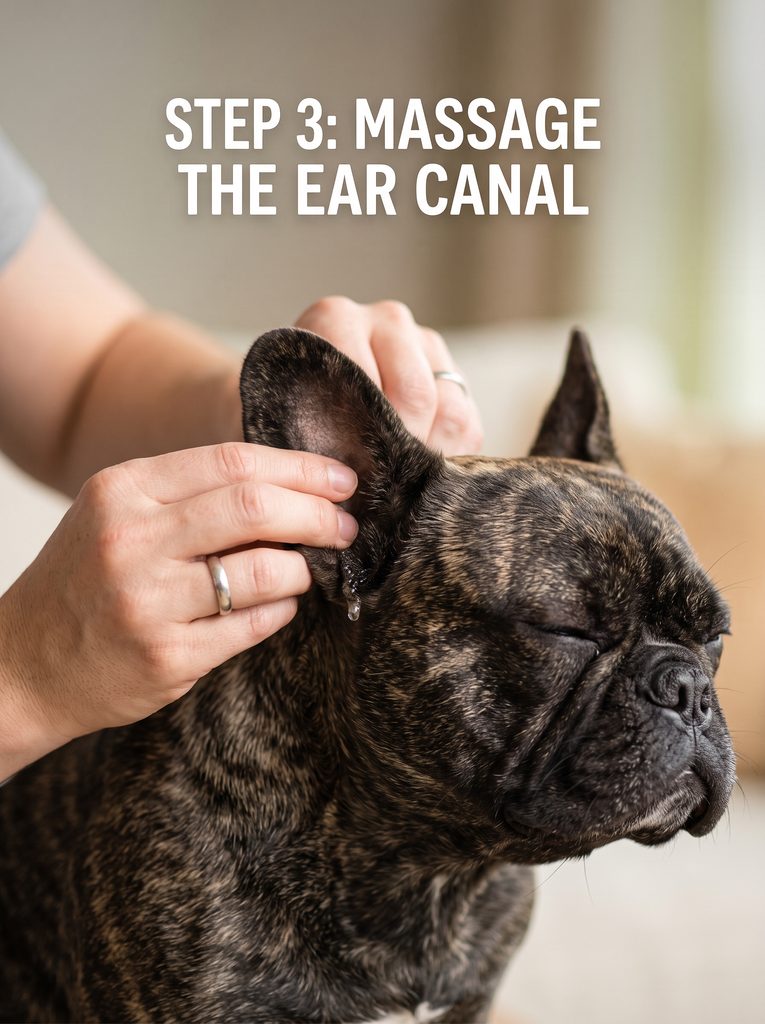
After applying the ear-cleaning solution, gently massage the base of your Frenchie’s ear. Use your fingers for about 20 to 30 seconds. This helps loosen wax and debris inside the ear canal. Massage gently because Frenchie ears can become sensitive when irritated, inflamed, or infected. Stop if your Frenchie shows pain.
You may hear a soft squishing sound during massage. That usually means the solution is moving through the ear. Let your Frenchie shake their head afterward. This helps bring loosened debris toward the outer ear. Never massage forcefully, especially when Frenchie ears show redness, swelling, discharge, or other signs of infection.
Step 4: Dry the Ear
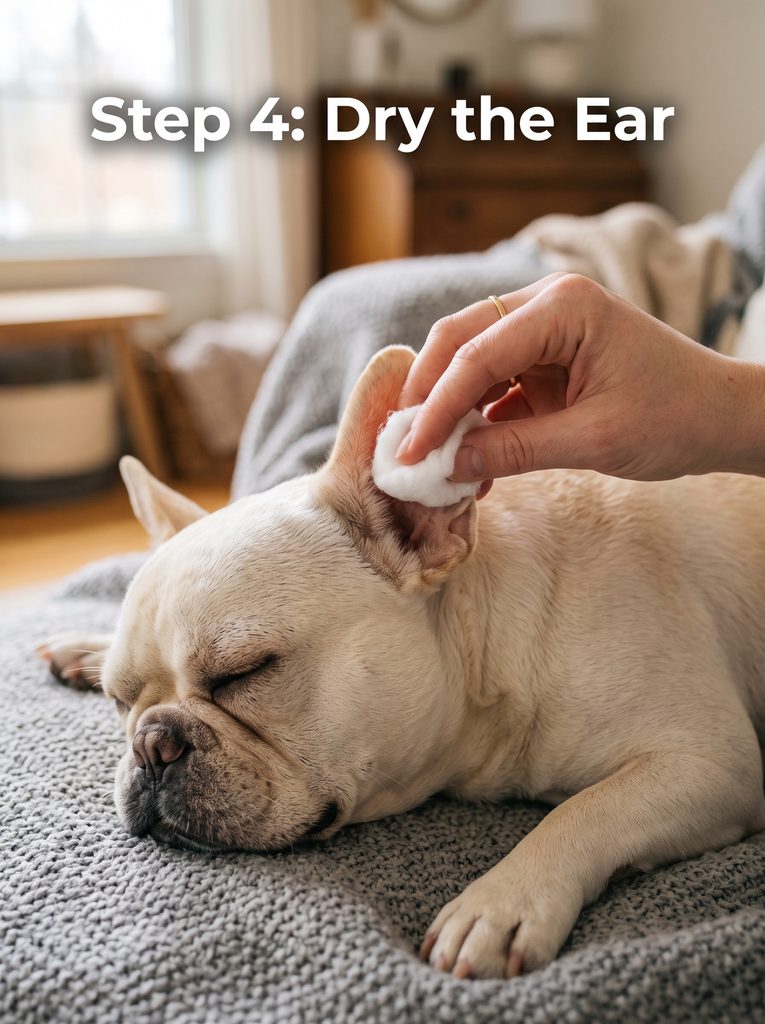
Once cleaning finishes, gently wipe your Frenchie ears with clean gauze or a cotton ball. Focus on the outer ear and ear flap. Remove excess moisture without pushing anything deep inside. Keeping Frenchie ears dry helps reduce moisture buildup, which can encourage bacterial or yeast growth in warm environments.
Take a moment to check the ears again after drying. They should look clean without excessive redness, swelling, or discharge. Don’t leave moisture trapped inside Frenchie ears. However, avoid aggressive rubbing because sensitive skin can become irritated. If painful ears remain after cleaning, seek veterinary attention promptly.

How Often Should You Clean French Bulldog Ears?
Most Frenchie ears don’t need daily deep cleaning. A weekly check can help you spot wax, dirt, or moisture early. Some French Bulldogs may need more frequent ear cleaning because of allergies, sensitive skin, or recurring ear infections. Your veterinarian can recommend a routine based on your Frenchie’s individual ear health.
Avoid over-cleaning because it can irritate the delicate skin inside Frenchie ears. Instead, check the ears regularly and clean them when needed. Keep the outer ear dry and remove visible debris gently. If Frenchie ears remain healthy and clean, frequent cleaning may do more harm than good.
Signs That Your French Bulldog’s Ears Need Cleaning
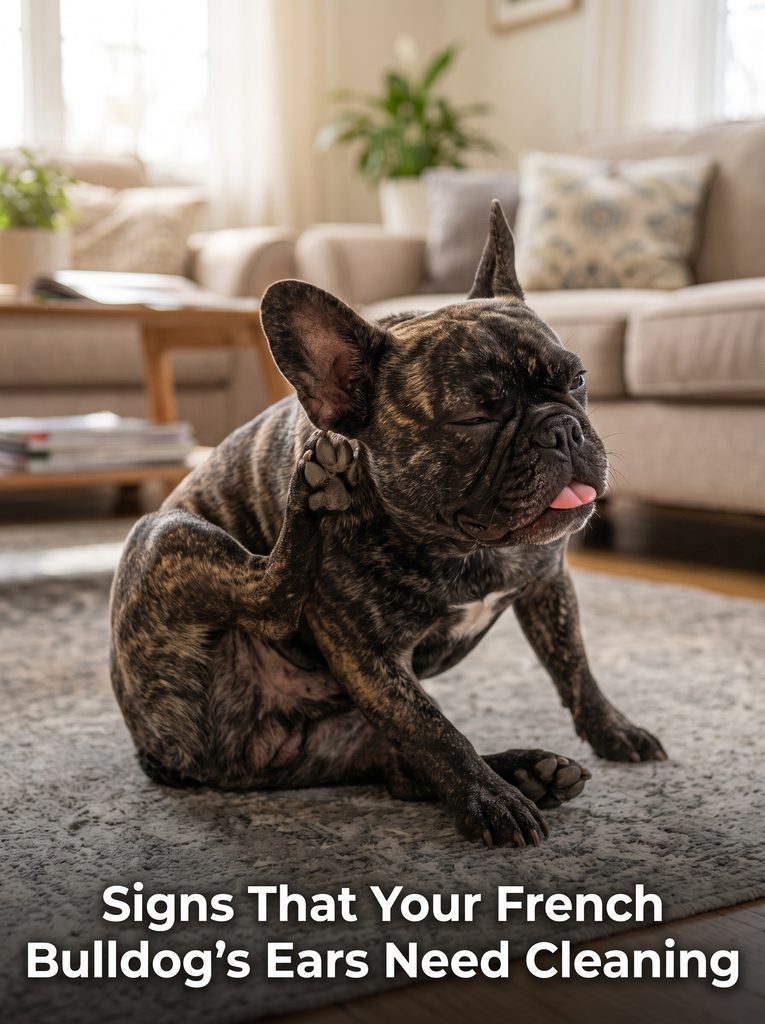
Several signs can tell you that your Frenchie ears need attention. Look for wax buildup, dirt buildup, unpleasant ear odor, or visible debris around the ear flap. Your Frenchie may also start scratching ears or shaking their head more often. These changes can signal irritation or poor ear hygiene.
However, some symptoms require more than routine cleaning. Redness, swelling, pus, blood, strong odor, discharge, or obvious pain can indicate an ear infection. Don’t try to treat infected Frenchie ears at home without veterinary guidance. A veterinarian can identify the cause and recommend appropriate veterinary treatment.

When to Consult a Veterinarian
Contact a veterinarian when your Frenchie ears show unusual changes. Watch for redness, swelling, strong odor, discharge, pus, blood, or noticeable pain. Frequent head shaking and scratching can also signal trouble. These symptoms may point to an ear infection, allergic otitis, ear mites, or another ear health issue.
Don’t delay veterinary attention when Frenchie ears look infected or painful. Your veterinarian can examine the ear canal and eardrum safely. They may recommend veterinary treatment based on the cause. Avoid using random ear-cleaning products or home remedies. Proper care can protect hearing and support your Frenchie’s overall well-being.
FAQ’s
How often should you clean Frenchie ears?
Check them weekly and clean only when needed. Your veterinarian may suggest more frequent cleaning if your dog has allergies, wax buildup, or recurring infections.
How do you clean Frenchie ears safely?
Use a vet-approved ear-cleaning solution and gently wipe the outer ear. Avoid cotton swabs because they can push debris deeper into the ear canal.
Why do Frenchie ears smell?
An unpleasant odor may come from wax buildup, moisture, bacterial infection, or yeast. Persistent odor should prompt a veterinary examination for proper diagnosis.
Can Frenchie ears get infections?
Yes. Bacterial infections, yeast infections, allergies, and ear mites can cause problems. Watch for redness, swelling, discharge, scratching, head shaking, or noticeable pain.
What should healthy Frenchie ears look like?
Healthy ears should look clean and comfortable without strong odor, excessive wax, redness, swelling, or discharge. Regular checks help you notice changes early.
Conclusion
Frenchie ears need simple and regular care to stay healthy. Their tall, bat-like shape can collect wax, dirt, and moisture. Regular checks help you notice problems early. Clean Frenchie ears gently when needed. Use a vet-approved ear-cleaning solution and soft gauze. Avoid over-cleaning because it can cause irritation. Keep the outer ear dry after cleaning. Good ear hygiene also supports your Frenchie’s comfort and overall well-being.
Watch Frenchie ears for redness, swelling, unpleasant odor, discharge, or pain. Scratching ears and frequent head shaking can also signal trouble. These signs may indicate an ear infection, yeast infection, allergies, or another ear health issue. If Frenchie ears look infected or painful, contact a veterinarian. Proper veterinary attention can protect hearing and prevent minor problems from becoming serious. With consistent ear care, your Frenchie ears can remain clean, comfortable, and healthy.