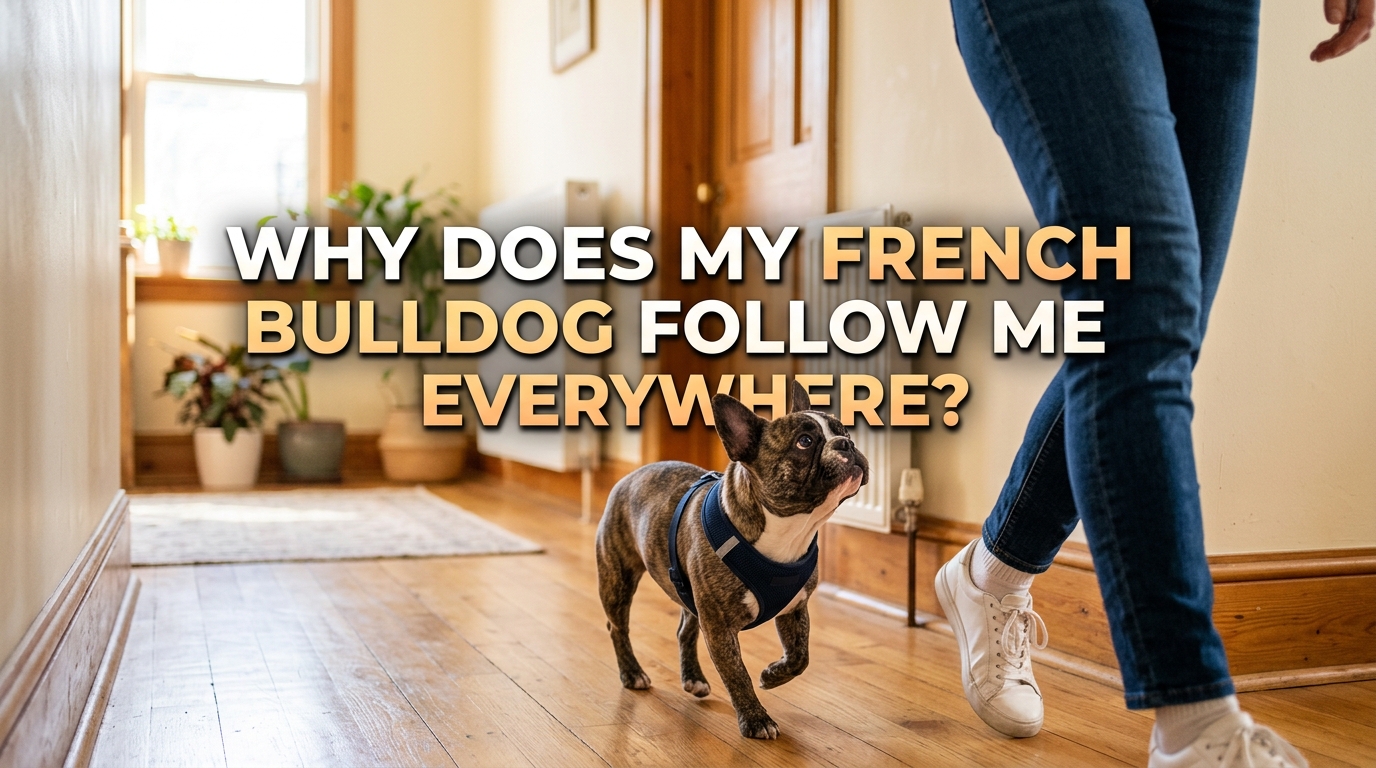
If you’ve ever wondered why does my French Bulldog follow me everywhere, you’re definitely not alone—this is one of the most common behaviors owners of a French Bulldog notice. These dogs are known for staying unusually close to their humans, often trailing them from room to room, waiting outside the bathroom door, or simply shifting positions whenever you move even slightly.
In most cases, this behavior is completely normal and comes from a mix of breed traits and emotional bonding. French Bulldogs were bred primarily as companion dogs, which means they are naturally inclined to stay close to people rather than be independent or territorial. Over time, they form strong attachments to their owners and often feel most secure when they can see or physically stay near them.
Another major reason is separation sensitivity. Many French Bulldogs develop a strong preference for constant companionship, so even short absences—like walking into another room—can trigger them to follow you just to stay connected. This isn’t necessarily anxiety in every case; it can also simply be learned behavior. If they have gotten used to receiving attention, treats, or reassurance when they follow you, they quickly repeat the habit.
Environmental factors also play a role. If your dog is bored, under-stimulated, or doesn’t have enough toys or structured activity, following you becomes a way to stay engaged. On the other hand, if you often interact with them while moving around the house, they may associate your movement with something interesting happening.
In short, a French Bulldog following you everywhere is usually a blend of affection, habit, and their naturally people-oriented temperament. It’s often a sign they feel safe with you—but if it becomes overly clingy or stressful, it can help to gradually build their independence through routine, enrichment, and short periods of alone time.
The French Bulldog personality and natural attachment
The French Bulldog is widely known for its affectionate and highly social personality, and this is deeply rooted in the breed’s history. Unlike many working or hunting dogs that were developed for independence and task-focused roles, French Bulldogs were selectively bred primarily for companionship. This means their natural instincts are strongly centered around human interaction rather than solitary activity or independent work.
As a result, French Bulldogs tend to form very close and consistent emotional bonds with their owners. Their attachment is not occasional or situational—it is usually steady and present throughout daily life. They often prefer to remain physically near their human family members, whether that means sitting beside them on the couch, following them from room to room, or simply staying within sight. This constant desire for closeness is one of the reasons they are commonly described as “velcro dogs,” a term used for breeds that stick closely to their owners at all times.
This strong attachment also influences how they behave when left alone. Compared to more independent breeds, French Bulldogs are generally less comfortable spending long periods by themselves. Instead of entertaining themselves for extended durations, they are more likely to seek reassurance, attention, or physical proximity from their owners. This behavior is not a sign of weakness or dependency in a negative sense, but rather a reflection of their emotional wiring as companion animals who thrive on social connection.
Because of this temperament, French Bulldogs tend to be happiest in environments where they receive regular interaction, affection, and inclusion in daily activities. Their loyalty and desire for closeness make them especially affectionate companions, but it also means they rely heavily on their human family for emotional comfort and security.
Why does my French Bulldog follow me everywhere?
If you’re asking why does my French Bulldog follow me everywhere, it usually comes down to a mix of emotional attachment, instinct, and everyday reinforcement.
French Bulldogs are naturally very people-focused dogs, so your presence is their main source of comfort and security. To your dog, you are not just the owner—you are their “safe zone.” When you move around the house, they often interpret it as something worth checking out, because being near you means they feel protected, relaxed, and included in whatever is happening.
Another important reason is that dogs are highly social animals that rely on observing and staying close to their group. In a home setting, you become their social group. So when you stand up, walk to another room, or change activity, your French Bulldog instinctively follows to maintain that connection and avoid missing out. Over time, this becomes a consistent habit, almost like a routine they expect to continue throughout the day.
This behavior is also strongly shaped by reinforcement without you even realizing it. Every time your dog follows you and receives attention—even something small like a smile, a few words, eye contact, or a gentle pat—it reinforces the idea that staying close to you leads to something positive. Even if you sometimes ignore the behavior, occasional rewards are enough to strengthen it further.
In some cases, this constant following can also reflect mild separation sensitivity, which is common in companion breeds like French Bulldogs. They prefer closeness and may feel more relaxed when they can see or access you at all times.
Overall, this behavior is usually not a problem—it’s simply a reflection of their strong bond with you, their need for social connection, and the way daily interactions naturally reinforce staying close.
Why is my French Bulldog so clingy with me?
If you’re wondering why is my French Bulldog so clingy with me, the behavior is usually a normal expression of how deeply this breed relies on human connection, combined with how they interpret daily life in a home environment.
French Bulldogs are naturally companion-oriented dogs, meaning they are not built for independence in the same way some other breeds are. Over time, you become the center of their world, and they begin to associate you with almost every major source of comfort and stability in their life. This includes food, daily routine, emotional reassurance, play, and even environmental security. Because all of these positive experiences are linked to you, staying close becomes their default and most reassuring behavior.
From a psychological perspective, your presence acts like a “safe anchor” for them. When you are nearby, they feel more confident and relaxed because they can predict what is happening around them. When you leave their side, even briefly, they may feel uncertain or less stimulated, which encourages them to follow you or stay physically close to regain that sense of stability.
French Bulldogs are also quite sensitive to subtle changes in routine, tone, and environment. If something in their day feels different—such as a change in schedule, less activity than usual, or being left alone more often—they may respond by increasing clingy behavior. This is not necessarily anxiety in every case, but rather a way of seeking reassurance and maintaining emotional balance.
In many homes, this closeness is unintentionally reinforced as well. When a dog sticks near you, it often results in interaction—talking, touching, or acknowledging them—even if it’s brief. These small moments reinforce the idea that staying close leads to attention and comfort, which strengthens the habit over time.
Overall, clinginess in French Bulldogs is usually a combination of strong attachment, emotional sensitivity, and learned behavior. While it can feel intense at times, it is generally a reflection of trust and bonding rather than a behavioral problem.
This clinginess is usually rooted in emotional dependence. Your dog sees you as their primary source of:
- Comfort and safety
- Food and routine
- Social interaction
- Emotional reassurance
As a result, staying close to you becomes their default behavior.
Additionally, French Bulldogs are sensitive to changes in environment and routine. If they feel uncertain or understimulated, they may increase their proximity-seeking behavior. This can make their attachment appear even stronger during certain times of the day.
Is it normal for my dog to follow me from room to room?
Yes—in most cases, it is completely normal to wonder is it normal for my dog to follow me from room to room? and for French Bulldogs specifically, this behavior is very typical and usually nothing to worry about.
French Bulldogs are naturally social, companion-oriented dogs that have been bred for close human interaction rather than independence. Because of this, they tend to prefer staying near their owners as their main source of comfort, security, and engagement. In a home environment, you essentially become their “social center,” so even simple movements—like standing up, walking into another room, or changing activity—can immediately attract their attention and trigger the instinct to follow.
From their perspective, following you is not random behavior; it is a way of staying connected to their primary source of reassurance. Dogs are also highly observant creatures, so they often assume that if you are moving, something interesting or important might be happening. This curiosity, combined with attachment, naturally leads them to trail behind you throughout the house.
The intensity of this behavior can vary quite a bit from dog to dog. Some French Bulldogs may follow their owners only occasionally, especially when they are relaxed or engaged with toys, while others may follow almost constantly. This difference usually depends on factors such as individual temperament, how much mental and physical stimulation they receive each day, their early socialization, and how often they are used to being alone.
In many cases, this behavior is also strengthened over time without intention. If following you results in attention—even brief interaction like talking, petting, or eye contact—it reinforces the habit and makes it more likely to continue. However, even without reinforcement, many French Bulldogs will still follow simply because being near their owner feels naturally comforting.
Overall, following you from room to room is a very normal expression of attachment and social bonding in French Bulldogs.
Boredom, routine, and French Bulldog habits
Boredom, daily routine, and general French Bulldog habits can play a significant role in why this breed tends to stay so close to their owners.
While French Bulldogs are not high-energy dogs that require intense exercise, they still need a balanced level of mental and physical stimulation to stay content. Their needs are more moderate, but they are still important. When those needs aren’t fully met, it can influence how they interact with their environment—and especially with their owner.
Mental stimulation is one of the most overlooked factors. Even though they may not need long training sessions or demanding activities, French Bulldogs still benefit from problem-solving games, short training exercises, and new experiences that engage their mind. Without this kind of stimulation, they can become more dependent on their owner as their main source of entertainment and engagement.
Physical activity also matters, even if it is in smaller amounts. Short daily walks help them explore their surroundings, release energy, and satisfy natural curiosity. Interactive play—such as gentle games with toys or light fetch—adds another layer of engagement that helps prevent excessive reliance on following behavior.
When a French Bulldog doesn’t receive enough structured activity or stimulation, they often adapt by focusing more heavily on their owner. In practical terms, you become the most interesting and rewarding thing in their environment. This naturally increases the tendency to follow you from room to room, simply because there is little else competing for their attention.
Routine also plays a part. Dogs are creatures of habit, and once they learn that following you is part of their daily pattern, it can become a deeply ingrained behavior. Over time, this routine can strengthen their attachment-based habits, making them more likely to stay close even when they are not bored.
Overall, this behavior is usually a combination of normal breed tendencies and environmental influence. When stimulation is balanced and routines are healthy, following behavior often remains affectionate and moderate rather than excessive or constant.
Although French Bulldogs do not require extreme exercise, they still need:
- Mental stimulation
- Short daily walks
- Interactive play
- Environmental enrichment
Without these, your dog may rely heavily on you for entertainment and stimulation. This is where understanding typical French Bulldog habits becomes important. A dog that lacks structured activity may develop stronger following behavior simply because you are the most interesting thing available in their environment.
Learned behavior and reinforcement
It is also important to understand the role of learned behavior in shaping why French Bulldogs become so attached and consistently follow their owners. Dogs are very quick learners when it comes to cause and effect, especially in everyday household situations. They constantly observe what actions lead to rewards, attention, or comfort, and they naturally repeat behaviors that produce positive outcomes.
In this context, “reinforcement” doesn’t always mean intentional training or rewards like treats. In fact, most reinforcement happens unintentionally during normal daily interactions. For example, when a dog follows you into the kitchen and you respond by giving them a small snack, speaking to them, or even acknowledging their presence, they begin to connect the action of following you with something rewarding. Similarly, if they follow you into another room and you respond with affection, cuddling, or playful interaction, this further strengthens the same association.
Over time, these repeated experiences build a strong behavioral pattern in the dog’s mind: staying close to the owner leads to positive outcomes. Because dogs rely heavily on repetition and consistency to learn, even small but frequent moments of attention can have a powerful long-term effect on their behavior.
This process gradually turns following behavior into a habit rather than a random action. The dog doesn’t just follow you because of curiosity or affection anymore—it also follows because it has learned that staying nearby increases the likelihood of receiving attention, food, or interaction.
In many households, this reinforcement is subtle but constant. Even eye contact, verbal responses, or gently moving around the dog to avoid stepping on them can be interpreted as attention. From the dog’s perspective, all of these responses confirm that following you is worthwhile.
As this pattern continues, the behavior becomes more automatic and frequent. Eventually, your French Bulldog may begin following you not just when they are seeking something specific, but simply because it has become their default way of interacting with you throughout the day.
When following behavior may indicate separation anxiety
In some situations, a French Bulldog that follows you constantly may be showing more than just normal affection or habit—it can sometimes be an early indicator of separation anxiety, especially when the behavior is paired with signs of distress related to your absence or even the anticipation of you leaving.
This is more likely to be a concern when your dog does not simply enjoy being near you, but instead appears unable to relax unless you are within sight. For example, if your French Bulldog becomes visibly anxious when you move out of the room, follows you immediately and persistently, or shows agitation when you prepare to leave the house (such as picking up keys, putting on shoes, or grabbing a bag), this can suggest that their attachment has developed into dependency rather than simple companionship.
In more clear cases, separation anxiety may also show up through additional behavioral symptoms when you are not present. These can include excessive whining, barking, or howling shortly after you leave, pacing around the home, restlessness that prevents them from settling, or even destructive behavior such as chewing furniture or scratching doors. Some dogs may also refuse to eat, lie down, or engage with toys until their owner returns.
The key difference between normal clinginess and separation-related anxiety lies in how the dog behaves when you are out of sight or out of the home, rather than just when you are physically nearby. A mildly attached dog may follow you around but still settle calmly when you are gone, while a dog experiencing separation anxiety typically struggles to relax once alone.
If you ever find yourself wondering why does my French Bulldog have separation anxiety, it becomes important to focus on these “alone-time” behaviors rather than only in-home attachment patterns. Observing how your dog behaves during departures and absences gives a much clearer picture of whether it is simple bonding or a deeper anxiety response.
Identifying these signs early is important because it allows you to gradually build your dog’s confidence and independence before the behavior becomes more intense or difficult to manage.
Signs may include:
- Excessive whining or barking when left alone
- Pacing or restlessness
- Destructive behavior
- Difficulty settling when you are not nearby
If you find yourself asking why does my French Bulldog have separation anxiety, it may be worth observing their behavior when you leave the home rather than just when you are inside.
Early identification is important, as it allows you to address the issue before it becomes more severe.
How to stop French Bulldog from following me everywhere (without harming trust)
If your goal is to understand how to stop a French Bulldog from following you everywhere, the focus should not be on reducing affection or “pushing them away,” but rather on gently building independence and emotional confidence. French Bulldogs are naturally people-oriented, so the aim is to balance their attachment with the ability to relax on their own without feeling stressed or excluded.
One of the most effective methods is to gradually teach short periods of alone time. This can be done by encouraging your dog to stay in a comfortable space (like a bed or designated area) for a few minutes while you move to another room. Start with very short durations and slowly increase the time as your dog becomes more comfortable. The key is consistency and keeping the experience calm and positive, so your dog learns that separation is temporary and not something to worry about.
Another helpful strategy is to provide engaging alternatives, such as puzzle toys, chew toys, or food-dispensing toys. These tools redirect their attention away from constantly monitoring your movements and instead encourage independent mental engagement. When a dog is mentally occupied, they are less likely to feel the need to follow you out of boredom or habit.
It is also important to avoid unintentionally reinforcing the following behavior. If your dog follows you everywhere and consistently receives attention, affection, or interaction in response, the habit becomes stronger. Instead, try to reward calm and independent behavior—such as when your dog is resting quietly in another room or staying settled on their bed without needing to be near you.
Building a predictable daily routine can also make a big difference. Dogs feel more secure when they can anticipate when they will receive walks, meals, playtime, and rest. A stable routine reduces anxiety and helps them feel less dependent on constantly checking your location for reassurance.
Ultimately, the goal is not to reduce the bond you share, but to help your French Bulldog feel secure even when they are not physically beside you. When they learn that being alone is safe and that attention is still consistent throughout the day, their need to follow you everywhere usually becomes more balanced and manageable.
Some effective approaches include:
- Teaching short periods of alone time in a separate room
- Providing puzzle toys and chew toys for mental engagement
- Avoiding constant reinforcement of following behavior
- Rewarding calm, independent behavior instead of clinginess
- Establishing a predictable daily routine
The goal is to help your dog feel secure even when they are not physically beside you.
Final thoughts
In most cases, the answer to why does my French Bulldog follow me everywhere is straightforward: it reflects the breed’s naturally affectionate, people-oriented temperament and their strong tendency to form close emotional bonds with their owners. French Bulldogs were developed primarily as companion dogs, so being near their human family is not just a preference—it is part of their core behavioral identity.
This constant closeness is usually rooted in trust, comfort, and social attachment. Your presence represents security and routine, and your movements throughout the home naturally draw their attention. For many French Bulldogs, staying nearby is simply their default way of participating in daily life and maintaining connection with their owner.
While this behavior can sometimes seem overly clingy, it is most often a normal expression of attachment rather than a behavioral problem. In a stable, well-stimulated environment, it typically reflects a healthy bond where the dog feels safe and emotionally connected.
However, it is important to distinguish between normal following behavior and situations where it may be linked to anxiety. If the behavior is accompanied by distress when separated, restlessness, or other signs of emotional discomfort, it may indicate a need for gradual training and confidence-building exercises.
Overall, in the majority of cases, this behavior is simply a reflection of the French Bulldog’s loving and companionship-driven personality, rather than something negative or concerning.