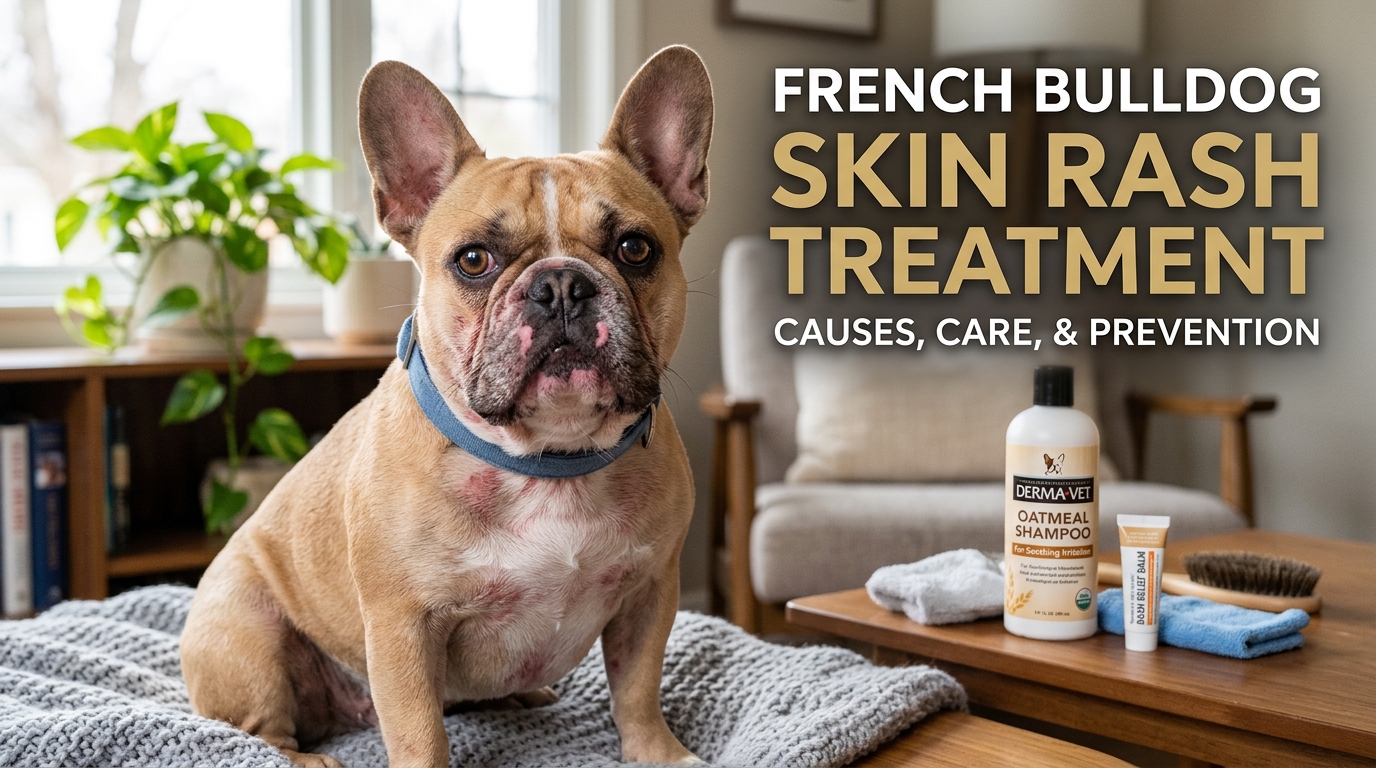
Skin problems are among the most common and frustrating health concerns in French Bulldogs. This breed’s signature features—deep facial folds, compact body structure, and naturally sensitive skin—also make them more vulnerable to irritation than many other dogs. What may first look like a minor rash or harmless redness can often be the visible sign of a deeper, ongoing issue.
In many cases, these skin flare-ups are not isolated problems. Instead, they are linked to underlying triggers such as allergies, bacterial or yeast infections, food sensitivities, or environmental irritants like dust, pollen, and cleaning chemicals. Because French Bulldogs have tight skin folds and limited airflow in those areas, moisture and debris can easily become trapped, creating the perfect environment for irritation and infection to develop.
This is why understanding the root cause is so important. Effective dog skin rash treatment is never just about calming the surface symptoms—it’s about identifying and addressing what’s causing the reaction in the first place. For example, a medicated cream might temporarily reduce redness, but if the underlying issue is an allergy or recurring yeast buildup, the rash will likely return once treatment stops.
You may also notice that these skin issues often come and go in cycles. A dog might appear fine for weeks and then suddenly develop itching, redness, or flaking skin again. This recurring pattern is a strong indicator that something deeper is going on rather than a one-time irritation.
By paying attention to early warning signs—such as constant scratching, licking paws, head shaking, or a noticeable odor from skin folds—owners can catch problems before they worsen. When combined with proper diagnosis and consistent care, these insights make it much easier to manage flare-ups and keep your French Bulldog more comfortable in the long run.
Understanding Why Skin Rashes Develop
Skin rashes in French Bulldogs rarely appear without an underlying reason. In most cases, they don’t suddenly “show up” overnight—instead, they develop gradually as a result of a mix of environmental exposure, immune sensitivity, and the breed’s unique skin structure. Because of this, attentive owners often notice subtle early warning signs first, such as mild redness, occasional itching, or small irritated patches that slowly become more noticeable and uncomfortable over time.
One of the most common culprits is dog skin allergies, which can be triggered by a surprisingly wide range of factors. Food ingredients, seasonal pollen, dust mites, grass, and even everyday household cleaning products can all act as irritants. In allergic dogs, the immune system essentially overreacts to these normally harmless substances. This overreaction leads to inflammation in the skin, resulting in itching, redness, and sensitivity that can escalate quickly if the trigger continues to be present. Over time, repeated exposure without proper management often turns mild irritation into persistent skin flare-ups.
Another frequent issue is infection developing within the skin folds. French Bulldogs are especially prone to this because their adorable facial wrinkles create warm, enclosed, and often moist environments. These conditions are ideal for the growth of bacteria and yeast. When moisture, dirt, or food particles get trapped in these folds, it can lead to what is commonly known as a bulldog skin infection. Without regular cleaning and proper drying, these infections can become recurring and increasingly uncomfortable for the dog.
Parasites such as fleas and mites are also a major cause of skin irritation. Even a very small infestation can trigger intense itching. As the dog scratches, bites, or rubs the affected area, the skin becomes damaged and inflamed. This damage weakens the skin barrier and can quickly progress into hot spots or secondary bacterial infections, making the original problem much more severe than it initially appeared.
Understanding these causes is essential because effective treatment always depends on identifying the root issue—not just calming the visible rash.
Common Causes of Skin Rash in French Bulldogs
Although the outward symptoms may look very similar—redness, itching, flaking, or inflamed patches—the underlying causes of skin issues in French Bulldogs can be very different. Identifying the correct trigger is crucial because each condition requires a specific approach for effective relief and long-term prevention.
Some of the most common causes include:
- Allergic reactions triggered by food ingredients, seasonal pollen, dust, or even certain chemicals found in everyday household products. These allergies often cause persistent itching and recurring flare-ups that come and go depending on exposure.
- Flea bites or mite infestations, which can cause intense irritation even when only a few parasites are present. Many dogs develop sensitivity to flea saliva, leading to severe scratching and widespread discomfort.
- Yeast or bacterial infections in skin folds, which thrive in warm, moist areas such as the facial wrinkles of French Bulldogs. Once established, these infections can produce redness, odor, and greasy or inflamed skin.
- Irritation from grooming products or detergents, especially those containing harsh fragrances or chemicals. Even a product that is safe for other breeds can sometimes trigger a reaction in sensitive dogs.
- Excessive licking or scratching, which may start as a response to mild irritation but quickly develops into hot spots. These raw, inflamed areas often worsen rapidly if the behavior continues unchecked.
When these issues occur repeatedly or affect multiple areas of the body, they are often categorized broadly as French Bulldog skin problems. This umbrella term reflects how complex and interconnected the causes can be, making it important to look beyond surface symptoms and focus on what is actually driving the irritation in the first place.
Recognizing the Symptoms Early
Early detection plays a major role in preventing minor skin issues from turning into more serious complications. In the initial stages, the changes can be subtle and easy to overlook. The skin may appear slightly red, feel warmer than normal, or look a bit irritated in specific spots. Some French Bulldogs may begin scratching more often than usual, while others try to relieve discomfort by rubbing their face against furniture, carpets, or even the floor.
As the condition progresses, the symptoms usually become more obvious and harder to ignore. You might notice thinning hair or patchy hair loss around the affected area, increased inflammation, or a persistent unpleasant odor coming from the skin. In some cases, there may also be oily discharge or a sticky buildup, especially in folds or moist areas. At this point, the problem is often more than a simple rash—it may be developing into a pet skin infection that requires timely attention and proper care.
French Bulldog Skin Rash Treatment at Home
When caught early, mild skin rashes can often be managed at home, but the key lies in consistency, patience, and proper hygiene. One of the most effective approaches for French Bulldog skin rash treatment at home is keeping the affected area clean, dry, and free from further irritation.
Cleaning should always be done with care using lukewarm water or a vet-recommended antiseptic solution. It’s important to avoid harsh soaps, alcohol-based products, or human skincare items, as these can strip the skin’s natural barrier and make irritation worse instead of better. After cleaning, thorough drying is essential—especially in skin folds where moisture can easily become trapped and go unnoticed.
Moisture control is one of the most critical factors in preventing a worsening bulldog skin infection. Even small amounts of trapped dampness can create the perfect environment for yeast and bacteria to grow, slowing down healing and increasing the risk of recurring flare-ups.
Equally important is stopping the cycle of scratching and licking. While it may seem like a natural response to irritation, continuous scratching can quickly turn a mild rash into an open wound or hot spot. In more persistent cases, using an Elizabethan collar may be necessary to prevent further self-trauma and give the skin a chance to heal properly.
Medical Treatment and Veterinary Care
When home care and basic hygiene measures are not enough, professional veterinary treatment becomes essential. At this stage, the focus shifts from simply soothing symptoms to identifying and treating the underlying cause of the rash. The type of medication prescribed will depend entirely on what is triggering the skin problem.
For yeast-related infections, veterinarians often recommend antifungal shampoos, medicated topical treatments, or in more severe cases, oral antifungal medications. These help control yeast overgrowth and restore balance to the skin. If the issue is caused by a bacterial infection, antibiotics may be necessary to stop the infection from spreading and to allow the skin to heal properly.
When the root cause is allergy-related, treatment usually focuses on reducing the immune response. Vets may prescribe antihistamines to control mild reactions or short-term corticosteroids to quickly reduce inflammation, redness, and intense itching. While these medications can provide fast relief, they are typically used as part of a broader long-term management plan rather than a permanent solution.
In addition to medication, medicated wipes designed for skin folds are often recommended. These are especially useful for French Bulldogs because they help keep hard-to-reach areas clean and reduce the buildup of moisture, bacteria, and yeast. Regular use can play an important role in preventing recurrence, particularly in managing treatment for yeast infection in dog skin folds, where hygiene is a key factor in recovery.
Managing Long-Term Skin Health
Because many French Bulldog skin issues tend to return, long-term management is often more important than short-term treatment. Repeated flare-ups are frequently linked to underlying allergies or environmental sensitivities, which means ongoing care and prevention are essential.
A structured approach to dog skin allergies treatment usually involves multiple strategies working together. One of the most common methods is a hypoallergenic diet trial, typically lasting 8–12 weeks. During this period, all potential food allergens are removed and replaced with a carefully selected diet to determine whether food is contributing to the skin condition. Improvements during this phase can provide valuable insight into long-term dietary adjustments.
Flea prevention also plays a critical role, even if no fleas are immediately visible. Sensitive dogs can react strongly to even a single flea bite, triggering intense itching and reactivation of French Bulldog skin problems. For this reason, consistent year-round flea control is often recommended as a preventive measure rather than a reactive one.
In some cases, veterinarians may also suggest omega-3 fatty acid supplements to support skin health from within. These supplements can help strengthen the skin barrier, reduce inflammation, and improve overall coat condition. For dogs with ongoing or unclear symptoms, allergy testing may be recommended to identify specific environmental or food triggers, allowing for a more targeted and effective long-term management plan.
When to Seek Veterinary Help
While mild skin rashes in French Bulldogs can often be managed at home with careful hygiene and early intervention, there are certain situations where professional veterinary care becomes essential. Recognizing these warning signs early can make a significant difference in recovery time and prevent the condition from becoming more severe or long-lasting.
If a rash continues to spread despite home treatment, develops a strong or unpleasant odor, or begins to form open sores, it is important not to delay a veterinary visit. These symptoms often suggest that the issue is no longer a simple irritation but may involve a more advanced infection or inflammatory condition.
Other serious warning signs include persistent or severe itching, visible discomfort or pain when the area is touched, noticeable hair loss, or skin that appears thickened or rough over time. These changes often point to a deeper bulldog skin infection or a chronic allergic reaction that requires prescription-strength medication and a targeted treatment plan.
Prompt veterinary attention is crucial because untreated skin problems can escalate quickly. What begins as a minor rash can develop into widespread infection or long-term skin sensitivity, making treatment more complex and recovery more difficult.
Prevention and Daily Care Routine
When it comes to French Bulldog skin health, prevention is always more effective—and less stressful—than repeated treatment. Because this breed is naturally prone to skin sensitivity, a consistent daily care routine plays a vital role in reducing flare-ups and maintaining overall comfort.
One of the most important habits is the daily cleaning of skin folds, especially around the face. These areas should be gently cleaned and then thoroughly dried to prevent moisture buildup, which is one of the leading causes of irritation and infection. Even small amounts of trapped moisture can create an environment where bacteria and yeast thrive.
Choosing the right grooming products is equally important. Using fragrance-free, gentle shampoos and wipes helps protect the skin’s natural barrier and reduces the risk of unnecessary irritation. Harsh chemicals or heavily scented products can easily trigger sensitivity in dogs prone to skin issues.
Consistent flea prevention is another essential part of long-term care. Even minor infestations can cause intense reactions in sensitive dogs, quickly triggering flare-ups of dog skin allergies and other skin problems. Regular preventive treatments help eliminate this risk before it starts.
Diet also plays a major role in skin health. Poor-quality nutrition or ingredients that trigger sensitivities can worsen existing skin conditions and slow down the healing process. A balanced, high-quality diet supports the immune system and helps reduce the likelihood of recurring irritation.
Finally, it’s important to avoid over-bathing. While regular cleaning is beneficial, excessive washing can strip the skin of its natural oils, leaving it dry, fragile, and more prone to irritation. Finding the right balance helps maintain healthy skin while minimizing the risk of future flare-ups.